
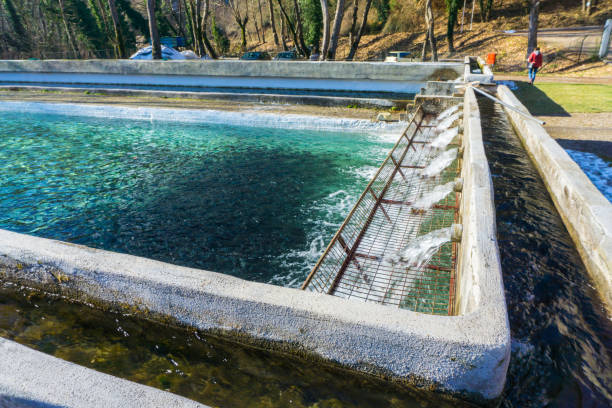
INTRODUCTION
The fish farming business in Tanzania is rapidly gaining momentum, offering significant opportunities for many entrepreneurs to improve their economic status and contribute to food security. Fish is a popular source of protein, and its market is extensive, including households, restaurants, and both domestic and international markets. The core of success in this business is having a solid infrastructure, and this is where the proper construction of a fish pond comes in. A well-built pond not only ensures the safety of your fish but also simplifies management and increases production efficiency. In this article, we will provide you with a comprehensive guide, from basic requirements, step-by-step construction processes, cost analysis, benefits and challenges, to secret success strategies that will make you a model farmer. Our goal is to equip Tanzanian entrepreneurs with the necessary knowledge to start and run a highly successful fish farming project.
ESSENTIAL REQUIREMENTS FOR FISH POND CONSTRUCTION
Before beginning the actual construction, there are crucial factors to consider that will determine the future of your project. These are as follows:
-
Capital: This is the first and most fundamental requirement. You will need funds for purchasing or leasing land, pond construction costs (excavation, building walls, etc.), buying quality fingerlings, initial feed, and other operational costs such as labor and transportation. Your budget will depend on the size and type of pond you intend to build.
-
A Suitable Location: Not all land is suitable for fish pond construction. You need to choose a site with the following characteristics:
-
Reliable Water Source: The site should be near a clean and permanent water source such as a river, spring, or deep well. A sufficient and clean water supply is crucial for the health and growth of fish.
-
Water-Retaining Soil: Clay soil or a mixture of clay and loam is most suitable because it prevents rapid water loss. This reduces the cost of refilling the pond frequently.
-
Gentle Slope: A site with a slight slope facilitates filling and draining the pond using gravity, which reduces pumping costs.
-
Security and Accessibility: It is important for the area to be secure from thieves and predators. It should also be easily accessible for transporting equipment, feed, and the fish when they are ready for market.
-
-
Skills and Knowledge: Fish farming, like any other business, requires knowledge. It is important to get training or professional advice on pond construction, fish care, water quality management, and disease control. Given its importance, it is wise to invest in acquiring the right education before starting the project.
DETAILED ANALYSIS: STEP-BY-STEP GUIDE TO PROPER FISH POND CONSTRUCTION
After fulfilling the initial requirements, it is now time to begin the construction itself. Follow these steps carefully to ensure you get a sturdy and standard pond.
1. Design and Surveying
This is where you plan how your pond will look. You should decide on the size and shape of the pond. Rectangular or square ponds facilitate easier management and harvesting. The size will depend on the number of fish you plan to farm; for example, a 100-square-meter pond can hold between 1000 and 2000 fish. After deciding on the size, mark the pond's boundaries and banks with pegs.
2. Site Clearing
Remove all trees, bushes, stones, and roots from the surveyed area. It is crucial to completely remove tree roots as they can create leakage paths later. The topsoil, which is rich in nutrients, can be set aside and later used to strengthen the pond banks.
3. Excavation
Excavation can be done manually or by using a machine (excavator). For large commercial ponds, using a machine is recommended for efficiency and speed. The pond should have adequate depth, typically between 0.5 to 1.0 meters at the water inlet and 1.5 to 2.0 meters at the outlet. This depth provides fish with refuge from extreme heat and cold. The pond bottom should have a gentle slope towards the outlet to facilitate easy harvesting and cleaning.
4. Dyke/Bund Construction
The excavated soil is used to build the pond dykes. These dykes must be strong and wide enough to prevent water leakage. Add soil in layers of 20-30 cm and compact each layer thoroughly. The top width of the dykes should be at least 1.5 meters for small ponds and 2.5 meters for larger stocking ponds. It is also important to leave a freeboard of about 30-50 cm from the water level to the top of the dyke to prevent overflowing during rains.
5. Installation of Water System (Inlet and Outlet)
This is a very critical part. The inlet pipe should be slightly above the pond's water level, and the outlet pipe should be at the lowest point of the pond to allow for complete drainage during harvesting. A "monk" or "standpipe" system is recommended for controlling the water level and draining excess water. Ensure all pipes have screens to prevent fish from escaping and other animals from entering.
6. Pond Lining and Compaction
To prevent water loss, the pond bottom and inner walls should be well compacted. In areas with sandy soil, it may be necessary to use a special plastic liner, build with concrete, or apply a thick layer of clay soil. The cost of an earthen pond ranges from TZS 500,000 to 2,000,000, while a concrete one can cost from TZS 3,000,000 to 5,000,000 or more, depending on the size.
7. Final Preparations Before Filling with Water
Before filling the pond with water, apply lime to kill pathogens and adjust the soil pH. After that, apply well-decomposed manure to stimulate the growth of plankton, which is the natural food for fish.
BENEFITS AND CHALLENGES
Benefits of the Fish Farming Business
-
Good Source of Income: Fish farming can be highly profitable due to the high demand for fish in the market. It is a fast-growing business opportunity with the potential for job creation.
-
Excellent Source of Nutrition: Fish are rich in nutrients, especially protein and Omega-3 fatty acids, which are essential for human health. Farming fish contributes to improving the nutrition of your family and the surrounding community.
-
Efficient Land Use: Fish farming can be practiced on land that is unsuitable for other crops, thereby increasing land use productivity.
-
Integrated Management: Water from the fish pond can be used to irrigate gardens, as it is rich in nutrients, thus creating an integrated farming system.
Challenges and How to Overcome Them
-
Fish Diseases: Diseases can cause mass mortalities and significant losses. Advice: Ensure pond cleanliness, manage water quality, and provide quality feed. Quarantine new fish before introducing them to the existing stock.
-
Water Quality: Sudden changes in temperature, oxygen depletion, and increased toxicity (ammonia) can kill fish. Advice: Test water quality regularly. Change the water when necessary and ensure no pollutants enter the pond.
-
Feed Costs: Fish feed constitutes a major part of the operational costs. Advice: Learn to formulate alternative feeds using locally available raw materials like bran, oilseed cakes, and food leftovers to reduce costs.
-
Availability of Quality Fingerlings: Finding high-quality, disease-free fingerlings is a challenge for many farmers. Advice: Source and buy fingerlings from reputable and trusted producers.
SUCCESS STRATEGIES AND TIPS
To be more successful in the fish farming business, consider these additional tips:
-
Start Small, Then Expand: If you are a beginner, start with one or two small ponds. This will reduce initial costs and give you an opportunity to learn practically before investing a lot of money.
-
Keep Accurate Records: Keep records of everything: construction costs, feed purchases, number of fish, their growth, and sales. This will help you evaluate your business's progress and make informed decisions.
-
Conduct Market Research: Before you even start farming, conduct market research in your area. Know which fish species are most preferred, their prices, and who your potential customers are (individuals, restaurants, hotels).
-
Add Value to Your Product: Instead of only selling raw fish, consider adding value by frying, smoking, or processing them. This can significantly increase your profit margins.
-
Network with Other Farmers: Join fish farmers' groups. This will give you the opportunity to share experiences, learn new techniques, and even find a collective market.
CONCLUSION
The proper construction of a fish pond is the solid foundation for a successful fish farming business. By following the steps and principles outlined in this article, from preparation, detailed construction analysis, to managing challenges, a Tanzanian entrepreneur can build a sustainable and profitable project. Remember, success in the fish farming business does not come overnight; it requires patience, continuous learning, and the courage to invest. Do not be afraid to start small, as the journey to great success begins with a single step. Start today, build your tomorrow.


