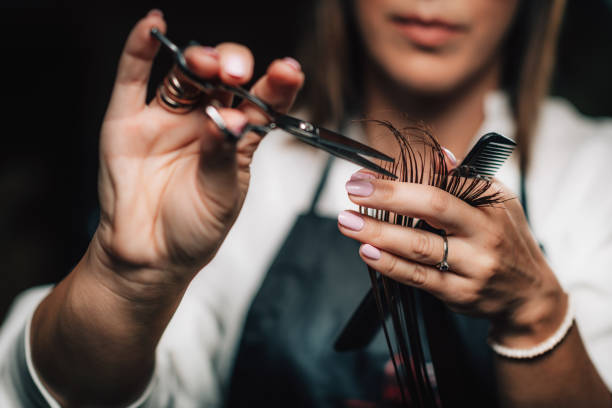
INTRODUCTION: The Reality of the Beauty Business in Tanzania
Over the past decade, the beauty sector in Tanzania has undergone a significant revolution. It is no longer a secret that Tanzanian women, from Dar es Salaam to upcountry regions, place immense value on their appearance. This makes the ladies' hair salon business one of the most attractive investment opportunities for small and medium-sized entrepreneurs (SMEs). The fundamental question many ask, "Is the hair salon business profitable?" requires an answer grounded in data and the reality of the local market. Unlike other businesses that may fluctuate with the economy, beauty is a psychological and social necessity; women will seek ways to braid their hair or get their nails done even on a tight budget, just to feel good and look presentable for work or social events.
This article is specifically crafted for you, whether you are looking to enter this market or upgrade your existing business. We won't just skim the surface; we will dive deep into the actual costs of starting this business, considering equipment prices in areas like Kariakoo and Mchikichini, how to find good staff (stylists) who won't desert you, and modern SEO and marketing strategies to beat your competitors. You will learn how to transform standard services like braiding, pedicures, and steaming into a sustainable source of income that can provide financial freedom. Welcome, and let's learn business.
KEY REQUIREMENTS AND PREPARATION BEFORE STARTING
Starting a high-standard ladies' salon that attracts clients requires more than just financial capital; it demands a strategic procurement plan and the right location choice. Below is a list of major requirements and detailed explanations based on the Tanzanian context:
-
Business Premises (Location Strategy):
This is the main pillar of the salon business. In Tanzania, the salon location must be in a high-traffic area that is easily accessible. Rent prices vary significantly; for example, a 'frame' (shop space) in areas like Sinza, Kinondoni, or Mwanza city center can cost between TZS 300,000 to 1,000,000 per month, and landlords often demand 6 months to a year's rent upfront. If you choose local streets (uswahilini), rent might be lower (around TZS 100,000 - 200,000), but the purchasing power of clients may differ. It is crucial to ensure the space is sufficient for chairs, a hair washing area, and space to place a generator outside in case of power outages.
-
Interior Equipment (Equipment Sourcing):
Equipment needs depend on the standard of salon you want. Typically, you will need Standing Dryers, Steaming Machines, Blow Dryers, and Flat Irons. These are readily available in Kariakoo along Gerezani or Agrey streets. For instance, a modern hair washing sink can cost from TZS 350,000 upwards. Hydraulic salon chairs are essential for client comfort and cost an average of TZS 150,000 to 300,000 each. Don't forget large mirrors and sufficient lighting (LED lights) because beauty is a visual business; if a client looks good in the mirror, half the battle is won.
-
Licenses and Compliance:
To operate without disturbances from authorities, you must register your business. The first step is obtaining a TIN Number from TRA. For small entrepreneurs, tax estimates can be friendly, but keeping accurate records is vital. You will also need a business license from your local Municipality, which often requires a Health Permit for your staff and premises, as salons involve physical contact and chemicals.
-
Staff and Stylists (Staffing):
This is where the biggest challenge and secret to success lies. You will need stylists skilled in modern trends (like Knotless braids, Yeboyebo, or Wavy styles). The payment system in Tanzania is often commission-based or a fixed salary. Many prefer commission (e.g., 30% or 40% to the stylist and the rest to the owner after deducting chemical costs). Finding trustworthy stylists is hard; it is advisable to find them through referrals or specific ads, and have clear contracts that prevent them from poaching your clients.
-
Consumables:
These are daily use items like Shampoo, Conditioner, Relaxers, Hair dyes, and Oils. It is advisable to buy these in bulk from wholesalers to reduce costs. Keeping a sufficient stock of clean towels and aprons is a sign of hygiene that attracts middle and upper-class clients.
DEEP ANALYSIS: IS IT PROFITABLE? (Profit Margins)
The quick answer is YES, the hair salon business is highly profitable if managed well. However, profit doesn't come by chance. To understand the profit, we must analyze the value chain of salon services. Unlike selling retail goods where margins are small per item, a salon sells "skill and time," which are high-margin services.
1. Hair Services Analysis
Let's take the example of braiding styles like "Knotless Braids" or "Ghanaian Lines". A client might pay between TZS 30,000 to TZS 80,000 depending on the size and salon location. The cost of braids might be on the client or the salon (often clients bring them or buy at the salon). The direct cost to the salon is minimal electricity, hair oil, and time. If the agreement with the stylist is 40/60, and the client paid TZS 50,000, the stylist gets 20,000 and the salon keeps 30,000. Serving just 3 such clients a day earns the salon TZS 90,000 clean before operating expenses. Per month (26 days), this is TZS 2,340,000 from braiding alone.
2. Add-on Services (Cross-selling)
Huge salon profits aren't just in braiding, but in services that don't take long but have high margins. Services like Wash and Set, Steaming, Pedicure, and Manicure. The cost of steaming treatment is low compared to the price charged. A client coming to braid can be persuaded to get a facial scrub or fix their nails. These are called "add-on services". One client can generate TZS 100,000 in a single day by doing mixed services.
3. Retail Sales
A profitable salon does not rely on services alone. Selling wigs, hair oils, extensions, and cosmetics inside the salon increases revenue streams. When clients trust your advice regarding their hair, they will buy the products you recommend. This eliminates rental costs for the products since you are already paying for the same space for the salon.
PROS AND CONS
Like any other business, the ladies' hair salon has two sides of the coin. Knowing them in advance will help you prepare.
Benefits of the Salon Business
-
Daily Cash Flow:
This is a business that generates cash daily. This helps immensely with working capital and solving minor issues without waiting for month-end.
-
Networking:
A salon is a hub of information and relationships. You meet people from various backgrounds who can be opportunities for your other businesses or provide important connections.
-
Not Highly Seasonal:
Although there are peak seasons like Eid or Christmas where revenue doubles, even in normal months women still need to look good. Hair grows and needs regular maintenance.
Challenges and Solutions
-
Staff Turnover:
Stylists moving with clients or having poor behavior is a major challenge. Solution: Build a good work environment, offer incentives (bonuses), and most importantly, brand your salon to be bigger than any single stylist's name so clients follow the salon's system, not an individual.
-
Electricity and Utility Costs:
Equipment like dryers and AC consume a lot of power. Solution: Use energy-saver technology, and ensure equipment is turned off when not in use. Price your services to account for these overhead costs.
-
Price Competition:
There might be many salons in one street. Solution: Do not compete by lowering prices; compete by offering superior customer experience. A client is willing to pay more at a place with a cold drink, AC, and polite language than a cheap place with annoyances.
SUCCESS STRATEGIES AND COMPETITIVENESS
To differentiate your ladies' salon business from the average local ones, you need modern competitive strategies:
-
Digital Marketing (Instagram & TikTok):
Modern Tanzania is digital. Post clean photos and videos of satisfied clients (with permission) on Instagram and TikTok. Use keywords like "Best Salon in Sinza" or "Modern Braids". Many new clients will come by seeing your work online before visiting the shop.
-
Hygiene and Branding:
Ensure towels are washed with disinfectant, combs are sterilized, and the floor shines. Have uniforms for your staff, even if they are simple t-shirts with the salon logo. This adds value to your brand and justifies charging good prices.
-
Customer Care:
Train your staff in polite language. When a client arrives, offer them a seat, ask what they need gently, and offer water or candy. "Good language is capital enough." Clients may forgive technical mistakes sometimes, but they rarely forgive disrespect.
-
Client Database Management:
Take your clients' phone numbers. Send them SMS reminders for their appointments or wish them well on holidays and birthdays. This builds loyalty and makes them feel valued.
CONCLUSION
In conclusion, the ladies' hair salon business is a sustainable and profitable investment in Tanzania if done with professionalism, strategic planning, and solid management. Although challenges like staff management and operating costs exist, they can be controlled with good systems and excellent customer service. The beauty market is huge and continues to expand daily.
Do not wait for tomorrow; start researching locations today, source equipment according to your budget, and enter the world of beauty aiming to solve client problems while generating legitimate income. Success belongs to those who dare to start!